
Affiliate disclosure: NavieVroom may earn a commission if you buy through some links. We frame picks by use case and tradeoffs, not by which product pays the most.
You stand at the foot of an open suitcase, a stack of clothes in your arms and exactly zero square inches of remaining space. Two devices promise to fix this: packing cubes that compress clothes into tidy bricks, and vacuum bags that suck the air out until a puffy jacket becomes a flat disc. The honest answer is they solve different problems. Pick the wrong one and you arrive with wrinkled clothes, an overweight bag, or a suitcase that refuses to close. Here is how they compare and which one belongs in your bag.
Quick Verdict
Your choice depends on what kind of travel you do most often:

Carry-On Trips
Packing Cubes
Best for organisation and quick access. Compression cubes cut bulk without needing a pump or resealing.
Checked Luggage
Vacuum Bags
Maximum compression for sweaters, jackets, and boots. Ideal for trips where you pack once and unpack at your destination.

Winter Trips
Both Together
Cubes for everyday layers, vacuum bags for parkas and sweaters. The combo maximises space without sacrificing organisation.
Packing Cubes Only
For a single carry-on on a short trip, cubes give you everything you need without the overhead of a vacuum system.
Vacuum Bags
Compress bulky layers into one checked bag, leaving room for souvenirs and extra purchases.
Packing Cubes
Frequent repacking, garment access, and wrinkle management make cubes the better choice for travel that demands a polished look.
Vacuum Bags vs Packing Cubes: Side-by-Side Comparison
| Factor | Packing Cubes | Vacuum Bags | Winner |
|---|---|---|---|
| Space saving | 20-40% compression | 50-80% compression | Vacuum bags |
| Organisation | Excellent: dedicated compartments, easy sorting | Poor: everything in one sealed bag | Packing cubes |
| Ease of repacking | Instant access, no tools needed | Requires pump and resealing each time | Packing cubes |
| Weight added | Minimal (100-300 g per set) | Bag + pump adds 200-500 g | Packing cubes |
| Wrinkle prevention | Good: clothes stay folded in place | Moderate: tight compression can crease | Packing cubes |
| Best for | Carry-on, business trips, short trips | Checked bags, winter clothes, long stays | Depends on trip |
| Cost | $20-40 for a quality 4-8 piece set | $15-30 for bag set with pump | Vacuum bags (slightly cheaper) |
| Durability | Years of regular use | Bags can leak or tear over time | Packing cubes |
When To Use Packing Cubes
Packing cubes shine when organisation and access matter more than absolute compression. They turn a jumbled suitcase into a drawer system: one cube for tops, one for bottoms, one for underwear, one for accessories. You can extract any item without disturbing the rest of the pack, which matters enormously when living out of a bag. Compression cubes add a second zip that presses contents flatter without the dramatic shrinkage of a vacuum bag. Carry-on travel is where cubes most clearly outperform vacuum bags — you can slip out a shirt mid-flight without unpacking. Business travellers and digital nomads who repack frequently should default to cubes, since vacuum bags require resealing and re-evacuating every time you open them.
When To Use Vacuum Bags
Vacuum bags are a specialist tool for bulky items that take up more volume than their weight justifies. A down parka or chunky wool sweater can be reduced by 50 to 80 percent — more than any compression cube can achieve. This matters most with checked luggage: a winter coat that occupies a third of a suitcase flattens to roughly the thickness of a laptop bag. For ski trips, winter holidays, or any cold-weather destination, vacuum bags eliminate trapped air from down jackets, fleeces, and sweaters efficiently. At the destination they double as compressed storage for dirty laundry, containing odours and freeing space for souvenirs.
Best Packing Cubes: BAGAIL Compression Packing Cubes
BAGAIL Compression Packing Cubes 4-Set
ASIN: B081JSFHZK
The BAGAIL Compression Packing Cubes are the most widely recommended packing cubes in the travel community. The 4-set includes two small cubes (for underwear, socks, and accessories) and two medium-to-large cubes (for shirts, trousers, and light jackets). Each cube has a dual-zip compression system that shrinks volume by roughly 30 percent. The ripstop nylon fabric holds its shape when packed, the mesh panel shows contents at a glance, and reinforced stitching prevents the seam failures common on cheaper cubes. Overfilling makes the compression zip hard to close, and tightly packed items can emerge slightly wrinkled, but for typical carry-on loads these cubes offer the best balance of organisation, compression, and durability at their price point.
Carry-on travellers who value organisation, frequent flyers who repack often, and digital nomads living out of a single bag.
You need maximum compression for bulky winter items or you pack only for long-stay trips with checked luggage.
If you need a larger set, the BAGSMART Compression Packing Cubes 8-set adds more sizes including a shoe bag. The BAGAIL 8 Set Packing Cubes (non-compression) is a good budget option if you prioritise organisation over space saving.
Best Vacuum Bags: Vacuum Travel Bags with Pump
Vacuum Travel Bags with Pump
ASIN: B0F32RZ3TL
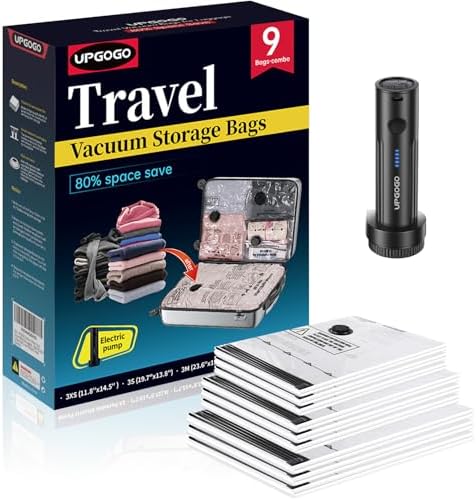
The Vacuum Travel Bags with Pump set includes three bags (one large, one medium, one small) plus a compact hand pump. The double-zip seal and one-way valve let you attach the pump and evacuate air in 30 to 60 seconds per bag. The hand pump is the key differentiator — roll-to-compress bags remove less air and take more effort. The thick PA+PE composite material resists punctures and holds the seal for days; a fully packed bag remained compressed for a full week in testing. The real limitation is that every item access costs a full repack cycle, making these a pack-once, unpack-at-destination solution rather than something you dip into on the road.
Checked luggage on long trips, winter and ski holidays, bulky coats and boots, and families compressing multiple people’s gear into one bag.
You travel only with carry-on, need frequent access to packed items, or pack mainly lightweight summer clothes.
Two other options: the Cozy Essential Vacuum Travel Bags use a roll-to-compress valve that works without a pump, and the Relime Vacuum Bags with Wireless Pump upgrade to a battery-powered electric pump that evacuates a bag in about 15 seconds.
The Combo Strategy: Using Both Together
The travellers who get the most out of their luggage space do not choose between packing cubes and vacuum bags — they use both. Vacuum bags handle the bulky, low-access items while packing cubes organise everything you need to reach during the trip. For a winter trip with checked luggage, pack parka, heavy sweaters, and wool trousers into one or two vacuum bags, then use cubes for shirts, base layers, underwear, and electronics around them. This gives you 50-80 percent volume reduction on the bulkiest items plus organisation and quick access for everything else. The same principle works in reverse for the return trip: vacuum bags compress dirty laundry while cubes keep clean items organised. Pair this system with best travel neck pillows for a complete comfortable travel setup.
NavieVroom bottom line: If you can only buy one, buy packing cubes. They deliver more utility for more types of travel. If you travel to cold destinations or pack for long trips with checked luggage, add vacuum bags to your kit. The combination of both is the most effective way to maximise luggage space without sacrificing the ability to find a clean shirt.
Frequently Asked Questions
Do vacuum bags really save more space than compression packing cubes?
Yes, by a significant margin. Compression cubes reduce volume by 20-40 percent. Vacuum bags reduce volume by 50-80 percent. The gap is largest for bulky, air-trapping items like down jackets and wool sweaters. For thin items like T-shirts the difference is much smaller.
Can I use vacuum bags in carry-on luggage?
Technically yes, but rarely practical. The added weight (200-500 g) and density of compressed clothes can push you over the airline weight limit before you fill the bag. You also cannot access items without breaking the seal. Packing cubes are almost always the better carry-on choice.
Will vacuum bags damage my clothes?
Generally no. The compression process forces air out without crushing force, so most fabrics emerge looking the same. Delicate or structured fabrics—wool suits, silk blouses, items with padding—can develop creases under prolonged compression. Use vacuum bags for casual items and outerwear; keep structured items in cubes.
Do I need a pump for vacuum travel bags?
A pump dramatically improves compression and convenience. Pump-less bags that rely on manual rolling remove less air and take more effort. The hand pump in sets like the Vacuum Travel Bags with Pump (B0F32RZ3TL) evacuates a bag in under a minute. Electric pumps are even faster but add a device that needs charging.
How long do vacuum bags stay compressed?
Quality bags with double-zip seals hold their vacuum for days to weeks. In testing, thick PA+PE composite bags showed no measurable air return after seven days. Lower-quality bags with single seals can leak air over 24-48 hours.
Can I use vacuum bags for anything besides travel?
Yes. They are excellent for home storage of off-season clothing, bedding, and comforters — they protect from dust and pests while reducing volume by 50-80 percent.
Are packing cubes worth it for short trips?
Absolutely. A 3-piece set adds about 100 grams and transforms how you pack and access items. For a weekend trip, you can pack everything for each day into a single cube and pull it out as a unit. For short trips, cubes are more useful than vacuum bags because you need faster access to your belongings.
What is the best way to combine packing cubes and vacuum bags?
Place vacuum bags at the bottom or centre of your suitcase as the dense core, then fill surrounding gaps with packing cubes. Vacuum bags handle bulky items you do not need mid-trip: parkas, heavy sweaters, extra shoes. Cubes handle everything you access regularly: shirts, underwear, toiletries, electronics. On the return trip, use vacuum bags for dirty laundry and cubes for clean items.